Why Is My Floor Sagging? Common Causes in Older Knoxville Homes
If you own an older home in Knoxville, you may have noticed your hardwood floors no longer feel level underfoot. That gradual dip or bounce in your living room is not just a cosmetic issue. A sagging floor is your home's way of telling you that the structural support system underneath needs attention.
The most common culprit behind sagging floors in older homes is deterioration of the floor joists, the horizontal beams that support your subfloor and everything above it. In Knoxville's humid climate, moisture infiltration is a persistent threat. When water seeps into the basement or crawl space, it creates the perfect environment for Wood Rot & Dry Rot Repair issues. Wood rot weakens the structural integrity of joists, causing them to lose their load-bearing capacity. Over time, the floor above settles and sags as the weakened joists compress under the weight of the house.
Another frequent cause is pest damage, particularly from termites. Termite Damage Repair is essential because these insects tunnel through wood, hollowing it out from the inside. A joist that appears solid from above may be severely compromised internally. Sagging often becomes visible years after the initial infestation, once enough structural material has been consumed.
Undersized or improperly spaced joists can also contribute to floor sag, especially in homes that have been renovated or had walls removed without proper support installation. Additionally, settling of the foundation or movement in support beams can gradually cause floors to slope over decades.
How to Tell If Your Floor Sag Is Serious
Not every sloping floor demands immediate intervention, but distinguishing between minor settling and serious structural failure is critical. A floor that has sagged a quarter inch over 50 years may be cosmetically annoying but structurally manageable. However, a floor that sags a full inch or more, or sags noticeably in a short time frame, signals an active problem that requires professional assessment.
Walk through your home and look for warning signs beyond the sag itself. Doors that no longer close properly, cracks in drywall or plaster, or visible separation between walls and floors often accompany structural movement. If you notice soft or spongy spots when walking on the floor, that typically indicates active wood rot in the joists beneath. A musty smell in the basement or crawl space is another red flag, pointing to moisture problems that are damaging your foundation support system.
The safest approach is to have a structural carpenter inspect your home. Knoxville Carpentry offers a comprehensive evaluation that identifies the root cause of the sag and determines whether immediate repairs are needed. Early detection can save you thousands in repair costs, so if you are concerned about your floors, do not delay scheduling a free estimate.
Floor Joist & Subfloor Repair: What Your Options Are
Floor Joist & Subfloor Repair methods vary depending on the extent of damage and the structural requirements of your home. For minor rot affecting only a small section of a joist, targeted repair using epoxy wood consolidant or localized sister joist reinforcement may be sufficient. However, when rot or termite damage is extensive, full joist replacement is the most reliable solution.
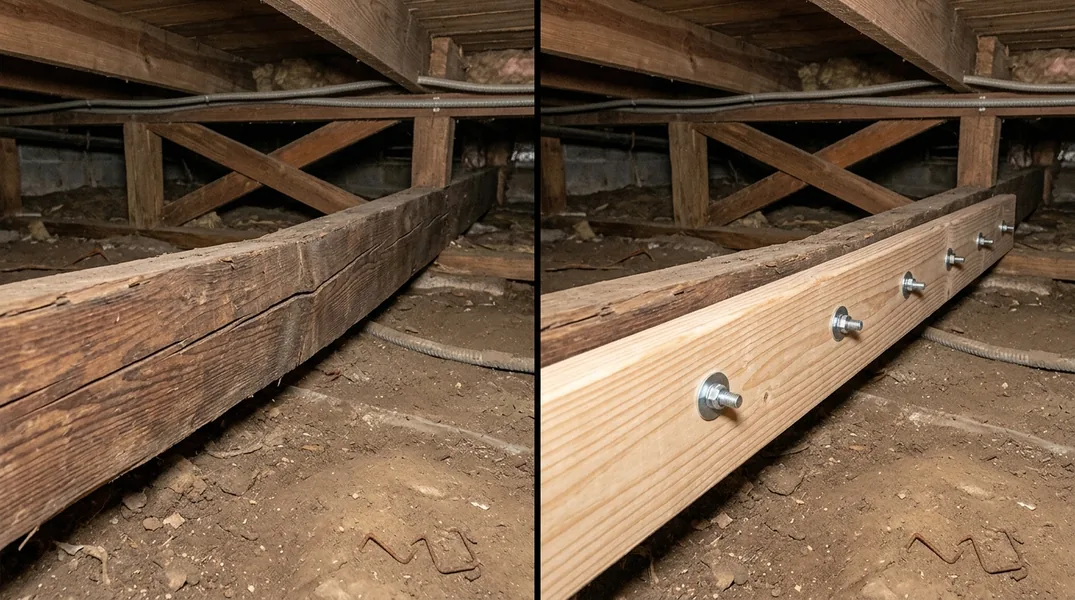
Sistering floor joists is a common repair technique where a new or reclaimed joist is fastened alongside a damaged one. This approach is effective when the original joist retains at least 50 percent of its structural capacity. The sister joist shares the load, restoring the floor's rigidity and preventing further sag. This method is often faster and less disruptive than complete joist replacement, particularly in homes where access is limited.
In cases where joists are severely compromised, full replacement becomes necessary. This is more labor intensive and requires temporary support of the floor above, but it ensures complete restoration of structural integrity. The choice between sistering and replacement depends on the damage assessment, the age of the home, and local building codes. Your carpenter will recommend the approach that best serves your home's long-term stability and your budget.
Sagging Floor Repair Cost in Knoxville: What to Budget
Understanding the financial investment required for sagging floor repair helps you plan accordingly. The pricing for floor repairs depends heavily on the severity of damage, the number of joists affected, and the accessibility of the damaged area. A small repair involving one sistered joist might cost between $1,500 and $3,500, while extensive rot affecting multiple joists can easily exceed $8,000 to $15,000 or more.
Several factors influence the final cost. If your home has a crawl space with good access, labor costs are typically lower than when repairs require working through a finished basement or removing flooring. The type of wood used for replacement or sister joists, the need for temporary support structures, and whether additional issues like moisture control or foundation work are discovered during the repair all affect pricing. Homes with significant water intrusion may require simultaneous basement waterproofing or drainage improvements, adding to the overall project cost.
It is important to view sagging floor repair as an investment in your home's value and safety, not merely an expense. Delaying repairs often leads to cascading damage: wood rot spreads, more joists weaken, and the repair scope grows. A home with sagging floors will fail inspection during a sale, and buyers will demand significant price reductions or request that repairs be completed before closing. Getting ahead of the problem with prompt professional repair protects your equity and prevents far costlier interventions down the road. Contact Knoxville Carpentry at (865) 500-6214 to discuss your specific situation and receive an accurate estimate.
Moisture Control: Preventing Future Floor Sag
Once your floor has been repaired, preventing recurrence is essential. The primary cause of floor joist deterioration in Knoxville homes is moisture. Controlling humidity and water intrusion in your basement or crawl space directly protects your floor system from future damage. This means ensuring gutters and downspouts direct water away from your foundation, grading the soil around your home to slope away from the house, and maintaining proper drainage.
Inside your crawl space or basement, aim for humidity levels below 60 percent. Installing a dehumidifier, improving ventilation, and sealing foundation cracks all contribute to a drier environment. If your home has a dirt crawl space, laying a vapor barrier over the soil significantly reduces moisture vapor that rises into the structure. These preventative measures are far less expensive than repair and will extend the life of your repaired joists for decades.
Regular inspections also help catch new problems early. Once a year, walk through your basement or crawl space looking for water stains, soft wood, or musty odors. If you spot signs of new moisture problems or wood damage, prompt action prevents the situation from worsening. Knoxville Carpentry can help you develop a maintenance plan tailored to your home's specific vulnerabilities.
When to Call a Professional for Sagging Floor Repair
While some homeowners attempt DIY repairs for minor issues, sagging floor problems almost always require professional assessment and repair. Structural work affects the safety of everyone in your home and must meet building codes. An improperly repaired floor can shift further, causing new cracks, squeaks, or even collapse in extreme cases. Professional carpenters have the knowledge to diagnose root causes accurately, specify appropriate materials, and execute repairs that will last.
If you are noticing floor sag, soft spots, or signs of wood rot in your home, the best next step is a professional inspection. Knoxville Carpentry has years of experience diagnosing and repairing structural issues in older Knoxville homes. We will evaluate your situation thoroughly and explain your options in straightforward terms, so you understand exactly what needs to be done and why. Call us today at (865) 500-6214 or visit our website to schedule your free estimate. Do not let sagging floors compromise your home's integrity. We are here to help.
Looking for a professional carpentry contractor in Knoxville? Knoxville Carpentry responds fast for all your carpentry needs.
Get a Free QuoteOur services: Wood Rot & Dry Rot Repair · Termite Damage Repair · Floor Joist & Subfloor Repair