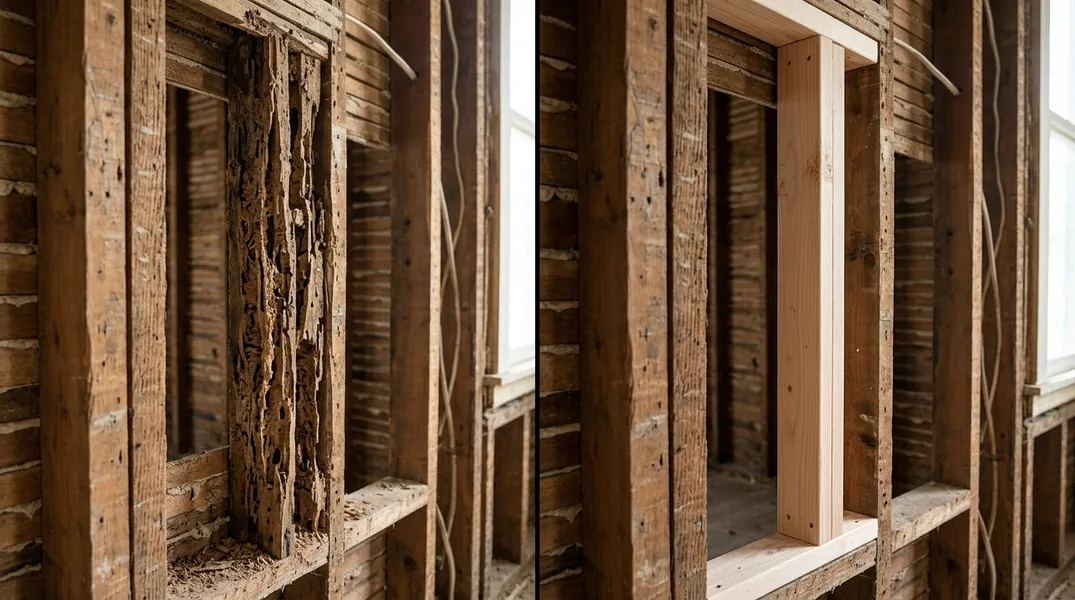
The Critical Difference: Dry Rot vs Termite Damage
If you own a Victorian home or older property in Knoxville, you've likely worried about wood damage at some point. Two of the most common culprits are dry rot and termite damage, yet they're fundamentally different problems requiring different solutions. Understanding the distinction between dry rot vs termite damage isn't just academic knowledge, it's essential for protecting your investment and your home's structural integrity.
Dry rot is a fungal decay that spreads through wood in the presence of moisture, while termites are living insects that actively consume wood as food. This fundamental difference means the damage patterns, progression rates, and repair approaches are entirely different. A homeowner who mistakes one for the other might waste money on the wrong treatment or, worse, allow serious structural damage to worsen. The good news is that with a little knowledge, you can identify which problem you're facing and know when to call in the professionals at Knoxville Carpentry.
What Does Wood Rot Look Like: Visual Clues for Dry Rot
Dry rot has a distinctive appearance that sets it apart from other wood damage. When you're inspecting your home, look for wood that appears darkened, shrunken, or cracked in a cube-like pattern. The wood often becomes brittle and crumbles easily when you apply pressure, almost like it's turning to powder. Wood Rot & Dry Rot Repair specialists know that dry rot typically starts in damp areas where moisture has been trapped for extended periods, such as around foundation walls, under poorly ventilated crawl spaces, or in bathroom subfloors.
One telltale sign of dry rot is the presence of white, thread-like strands called mycelium running through or across the wood surface. You might also notice a musty, earthy smell in affected areas, which is the fungus actively breaking down the wood. The rot often spreads slowly at first but can accelerate if moisture conditions persist. Unlike termite damage, which tends to follow grain patterns and create hollow galleries, dry rot creates a more uniform breakdown of the wood structure, leaving it soft and spongy when wet or brittle and cracked when dry.
Signs of Termite Damage in Wood: What Insects Leave Behind
Termite damage tells a different story than dry rot. Instead of fungal decay, you're dealing with active consumption by insects. Termite Damage Repair begins with recognizing the patterns termites create. These insects eat along the grain of the wood, leaving behind hollow galleries and tunnels. If you tap on wood infested with termites, it often sounds hollow, and you might see mud tubes (earthen tunnels) running along foundation walls or wooden supports where termites travel between soil and wood.
Unlike dry rot, termite-damaged wood maintains its structural outline on the surface while being hollowed out from within. You might see small exit holes where termites have bored through the surface, or you could spot actual termites themselves, particularly during swarming season in spring. Termite damage progresses more visibly and rapidly than dry rot, especially if the colony is large and well-established. The wood doesn't necessarily need to be wet for termites to thrive, though they do prefer moisture. This is why termite damage can occur in areas of your Knoxville home that appear dry to the naked eye.
Where Each Problem Typically Occurs in Your Home
Understanding where dry rot and termite damage commonly appear can help you know where to focus your inspection efforts. Dry rot thrives in persistently damp environments, making it a frequent problem in basements, crawl spaces with poor ventilation, around plumbing leaks, and in areas where water intrusion from rain or groundwater occurs. Bathrooms and kitchens are particularly vulnerable since they naturally have higher moisture levels. Any wood that stays damp for extended periods is at risk, which is why Floor Joist & Subfloor Repair is one of the most common services needed in older homes.
Termites, by contrast, don't require the same level of persistent moisture. They're found wherever wood makes contact with soil or where they can access wood from the ground. This means foundation walls, wooden posts in crawl spaces, siding, deck supports, and any wooden structure near grade level are fair game. Termites work their way up from the soil, which is why they're so common in homes built on concrete slabs or with minimal foundation ventilation. Both problems can affect structural elements like floor joists, beams, and load-bearing walls, but termites are more likely to attack the main support structure of your home if left unchecked.
Wood Rot vs Termite Damage: Progression and Risk Timeline
The speed at which each problem develops is important for homeowners to understand. Dry rot typically progresses slowly, sometimes taking months or years before it becomes visually obvious or structurally significant. However, once moisture conditions are ideal, it can accelerate and spread throughout connected wood. The danger with dry rot is that it's often discovered late because it works quietly inside walls and floors where it's not easily visible. By the time you notice the musty smell or soft spots, the damage may already be extensive.
Termite damage, meanwhile, can progress surprisingly fast depending on colony size and wood accessibility. A large termite colony can consume significant amounts of wood in just a few months. The advantage is that termite damage is often more obvious, with visible mud tubes, exit holes, and sometimes the termites themselves providing clear warning signs. However, termites can also work hidden within walls for extended periods before becoming noticeable. If you suspect either problem, don't wait to investigate. Calling Knoxville Carpentry at (865) 500-6214 for a professional inspection is the smart move, whether you're dealing with dry rot, termites, or you're simply unsure what you're looking at.
When to Call a Professional: Getting a Proper Diagnosis
While it's helpful to understand the differences between dry rot and termite damage, a professional inspection is the only way to be certain of what you're dealing with and how extensive the problem is. A trained carpenter or pest inspector can identify the specific type of damage, assess the structural impact, and recommend the appropriate repair strategy. Trying to handle either problem without professional guidance can lead to incomplete repairs, ongoing damage, and potential safety hazards.
If you've noticed soft wood, musty odors, hollow-sounding structural elements, mud tubes, or any other signs of wood damage in your Knoxville home, don't delay. Contact Knoxville Carpentry today for a free estimate and professional assessment. We'll identify exactly what you're dealing with and create a repair plan tailored to your home's needs, whether that involves Wood Rot & Dry Rot Repair, Termite Damage Repair, or structural restoration like Beam Replacement & Load-Bearing Wall Removal. Your home's integrity depends on catching and addressing these problems early.
Looking for a professional carpentry contractor in Knoxville? Knoxville Carpentry responds fast for all your carpentry needs.
Get a Free QuoteOur services: Wood Rot & Dry Rot Repair · Termite Damage Repair · Floor Joist & Subfloor Repair